
Sampling
Supplies
We provide the bottles, labels and mailers for your sampling program. Tell us what equipment you are monitoring and how often, and we will get supplies out to you.
What we supply
- Sample bottles
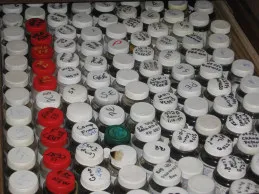
- Clean, sealed bottles sized for a routine engine or hydraulic draw. Using our bottles removes one common source of false contamination readings.
- Labels and sample information forms
- Pre-printed so the details we need — unit, product, hours or miles, date drawn — travel with the sample instead of arriving in a separate email.
- Mailers
- Packaging suitable for shipping oil samples, so nothing leaks in transit and the bottle arrives intact.
- Sampling pump or tubing
- For units without a fitted sample valve. Tell us how you draw the sample and we will advise what you need.
How to request supplies
There is no online store — supplies are arranged directly, so we can match what we send to what you are actually sampling. Send us a note or call the lab.
Drawing a good sample
The analysis can only be as good as what arrives in the bottle. Four things make the difference between a result you can act on and one that raises more questions than it answers.
- 1
Sample warm, running equipment
Draw while the oil is at operating temperature and circulating, so what is in the bottle represents what is in the machine. A cold, settled sump gives a misleading result.
- 2
Take it from the same point every time
Consistency matters more than the exact location. A trend is only meaningful when each sample is drawn the same way, from the same place.
- 3
Keep it clean
Do not reuse bottles or rinse them with solvent. Dirt introduced during sampling shows up as silicon and skews the wear picture.
- 4
Label it completely
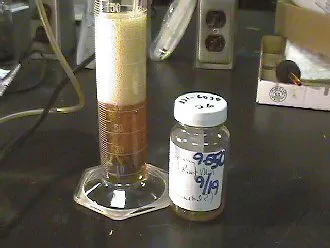
Unit identification, product and grade, hours or miles on the oil and on the machine, and the date drawn. Missing history is the most common reason a report cannot say much.
Not sure how to sample a particular unit? Call and ask — it is a five-minute conversation that saves a wasted sample.